
Be prepared
Be in the right place, at the right time, with the right equipment.
If your exam is online, eliminate all distractions, clear a quiet space and make sure you are not interrupted.
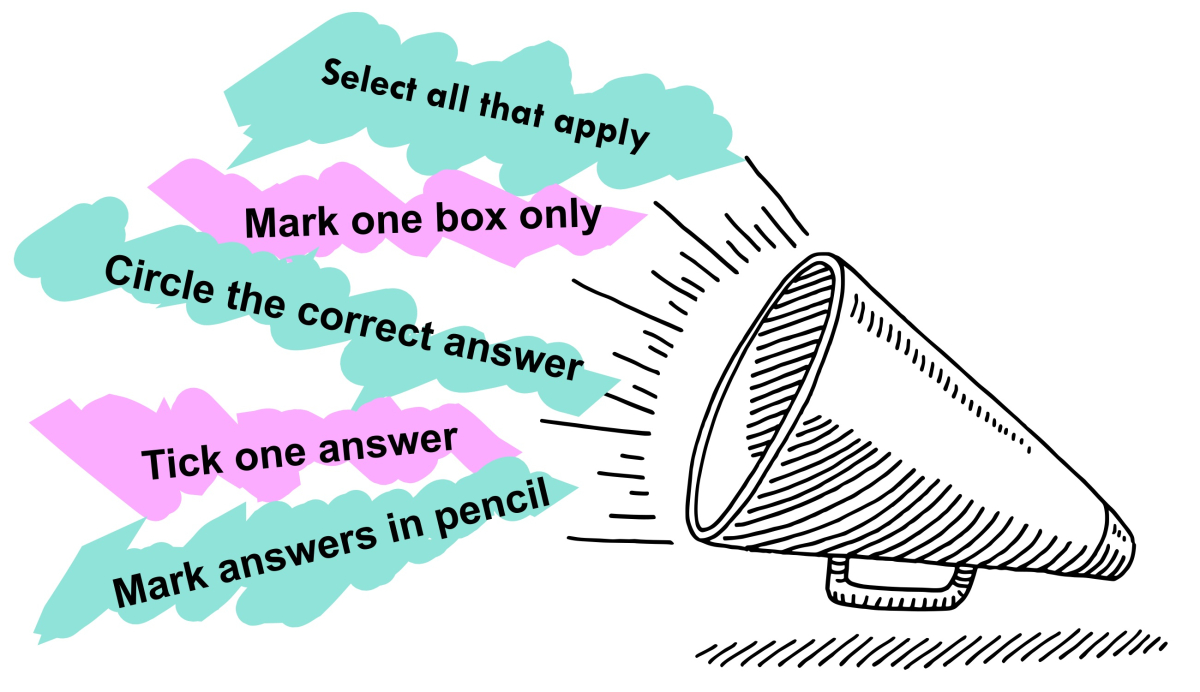
Read the instructions
In MCQ exams, the most common reason for losing marks is misreading the question.
- Read all initial instructions carefully
- Check each question’s instructions and wording carefully, in case these vary. Note how many choices you can make: do you need to select one answer or several?
Skim the whole paper
Gain a sense of:
- How many questions you need to answer and which will take you the most time – so you can pace yourself well
- The topics covered – so your brain can start to search for information on those topics
- The focus of questions and the wording used – so you can think through anything unexpected
Keep track of the time
- Don’t rush your reading and checking of the answers: this leads to mistakes
- Stay focused. A little time lost between each of many MCQs adds up to a lot of lost time
- Use any spare time to check carefully through the questions and your answers – you may have misread something earlier
Tips from other students
Click the arrow below to discover tips from other students on how to tackle MCQs.

Work steadily through all the questions to which you know the answer or can work out the answer easily. This ensures that if any difficult questions take up more time than others, you won’t miss out on marks for questions you could have answered later in the paper.
Once you have completed the questions that were easiest, count how many questions remain. Divide your remaining time between these. Keep track of how you are using time.
Mark any questions likely to consume your time. Decide how you will deal with them, depending on the proportion of marks they carry. If they carry few marks, leave them until last.

Highlight key words in the questions such as negatives (no, not, never, un-) and words or qualifiers that help narrow down the issue (ever, always, whenever, if …), dates, names, timescales, specific circumstances.

If your exam is online, find out whether you can return to questions. The technology may, or may not, allow you to return to questions, or a screen of questions, that you have missed out.
Pause for thought
- Where do you currently lose marks for MCQs?
- What strategies will you use to address this?
Get in the exam zone by downloading, and using, the planning checklist ‘The day of the exam’.
Be prepared
Be in the right place, at the right time, with the right equipment. If your exam is online, eliminate all distractions, clear a quiet space and make sure you are not interrupted.
Read the instructions
In MCQ exams, the most common reason for losing marks is misreading the question.
- Read all initial instructions carefully
- Check each question’s instructions and wording carefully, in case these vary. Note how many choices you can make: do you need to select one answer or several?
Skim the whole paper
Gain a sense of:
- How many questions you need to answer and which will take you the most time – so you can pace yourself well
- The topics covered – so your brain can start to search for information on those topics
- The focus of questions and the wording used – so you can think through anything unexpected
Keep track of the time
- Don’t rush your reading and checking of the answers: this leads to mistakes
- Stay focused. A little time lost between each of many MCQs adds up to a lot of lost time
- Use any spare time to check carefully through the questions and your answers – you may have misread something earlier
Tips from other students
‘Work steadily through all the questions to which you know the answer or can work out the answer easily. This ensures that if any difficult questions take up more time than others, you won’t miss out on marks for questions you could have answered later in the paper. Once you have completed the questions that were easiest, count how many questions remain. Divide your remaining time between these. Keep track of how you are using time.’ – Lily
‘Mark any questions likely to consume your time. Decide how you will deal with them, depending on the proportion of marks they carry. If they carry few marks, leave them until last.’ – Ravi
‘Highlight key words in the questions such as negatives (no, not, never, un-) and words or qualifiers that help narrow down the issue (ever, always, whenever, if …), dates, names, timescales, specific circumstances.’ – Amira
‘If your exam is online, find out whether you can return to questions. The technology may, or may not, allow you to return to questions, or a screen of questions, that you have missed out.’ – Enya
Pause for thought
- Where do you currently lose marks for MCQs?
- What strategies will you use to address this?
Get in the exam zone by downloading, and using, the planning checklist ‘The day of the exam’.